45 SanPiN and HACCP logs in one service
Everything required by SanPiN 2.3/2.4.4282-26 and the HACCP plan: from the daily health log to audit and traceability logs. Open any log to see what is recorded and which requirement calls for it.
Download blank formsDaily SanPiN
14 logs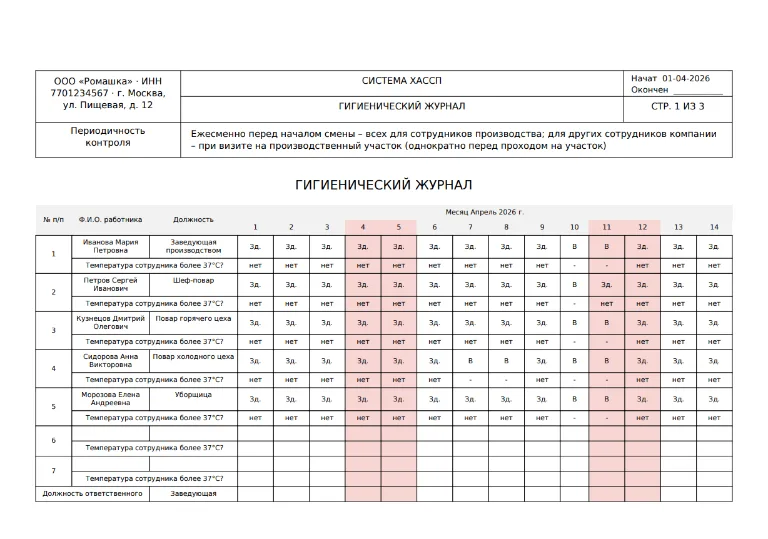
Keeps people with symptoms of acute respiratory viral infections, gastrointestinal infections or pustular skin lesions away from food handling. Completed for each employee on every shift.
Learn more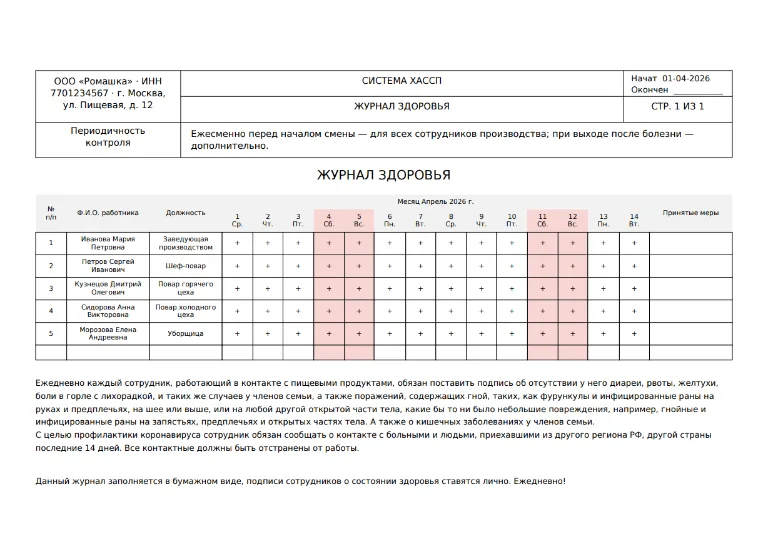
An expanded hygiene log that records each symptom as well as the admission decision, useful when investigating food poisoning.
Learn more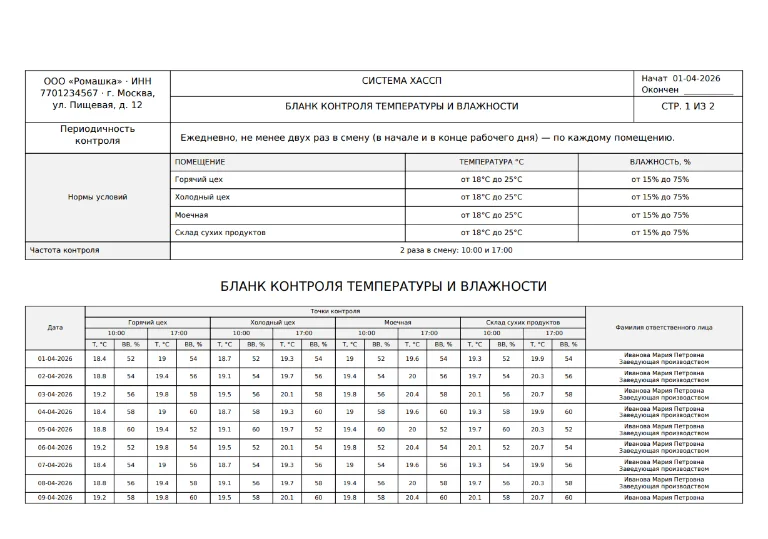
Food cannot be kept safe in a storeroom at 30 °C and 85% humidity. The log records whether the indoor conditions meet storage requirements.
Learn more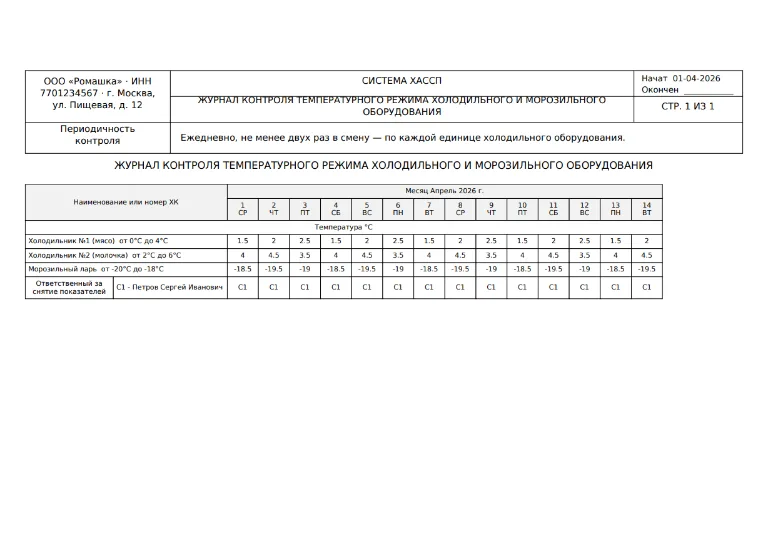
Refrigerators are a HACCP critical control point. At least once per shift, readings are checked against an external thermometer and the standard for the specific product.
Learn more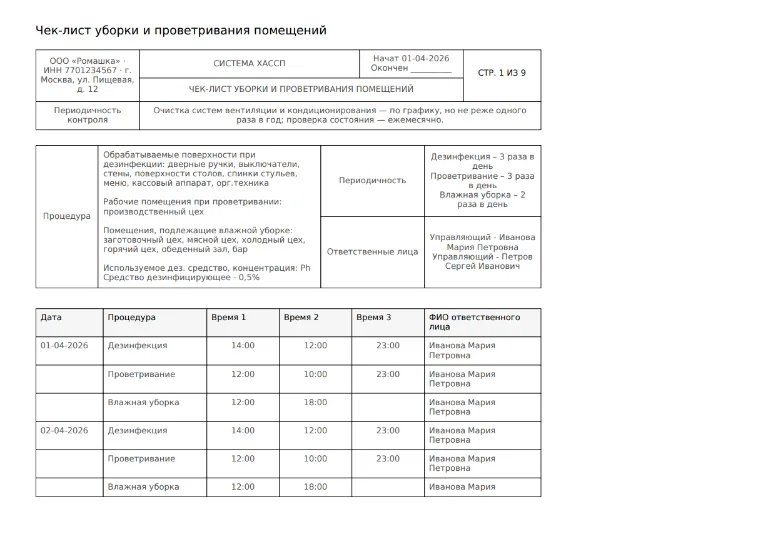
Fresh air and clean surfaces are basic sanitation. The log confirms that the procedures were carried out and signed off by a named person.
Learn more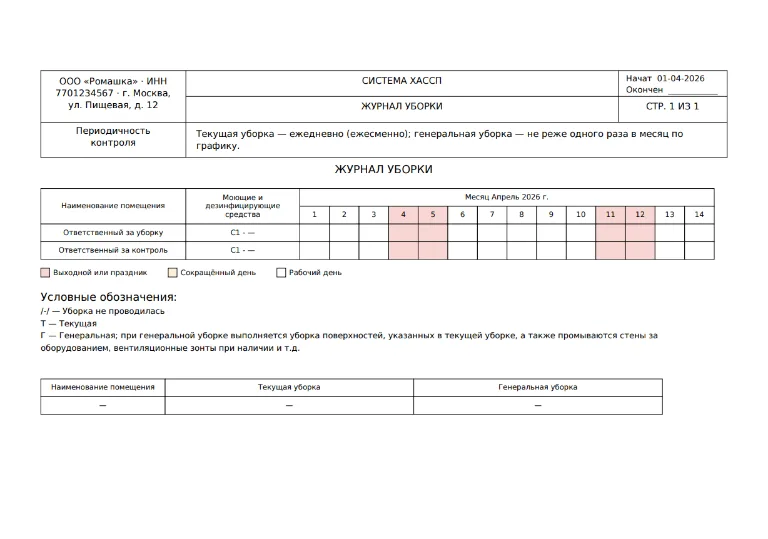
Daily routine cleaning: which rooms were cleaned, which detergents and disinfectants were used, who carried out the work and who checked it.
Learn more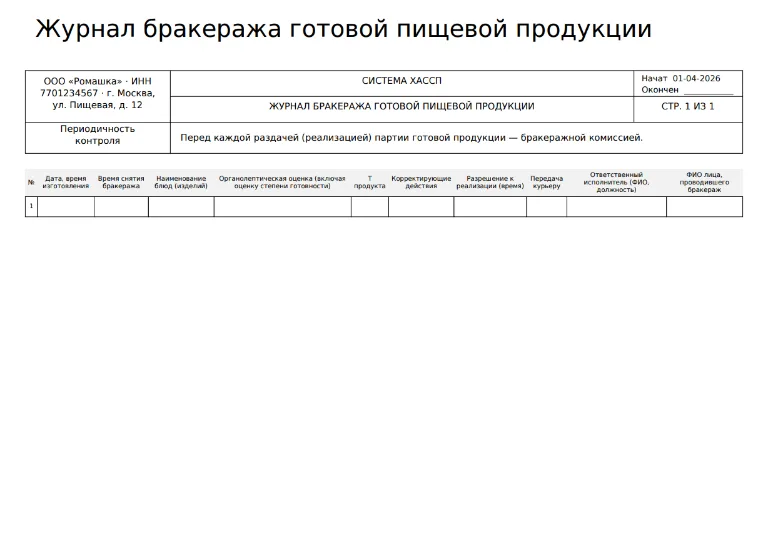
A key HACCP and SanPiN checkpoint: before a dish is served in the dining room, it must pass an organoleptic check. The log records the commission’s assessment.
Learn more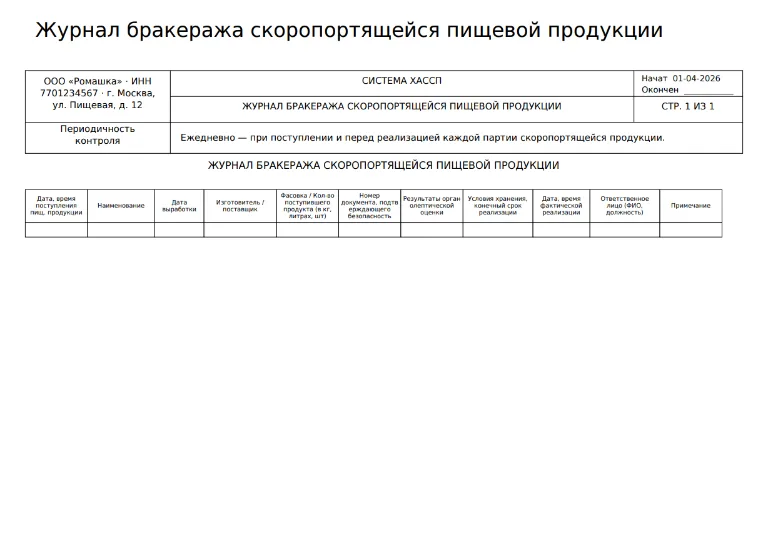
Incoming checks for dairy, meat and fish products: safety documents, organoleptic assessment, storage conditions and the final sale date of each batch.
Learn more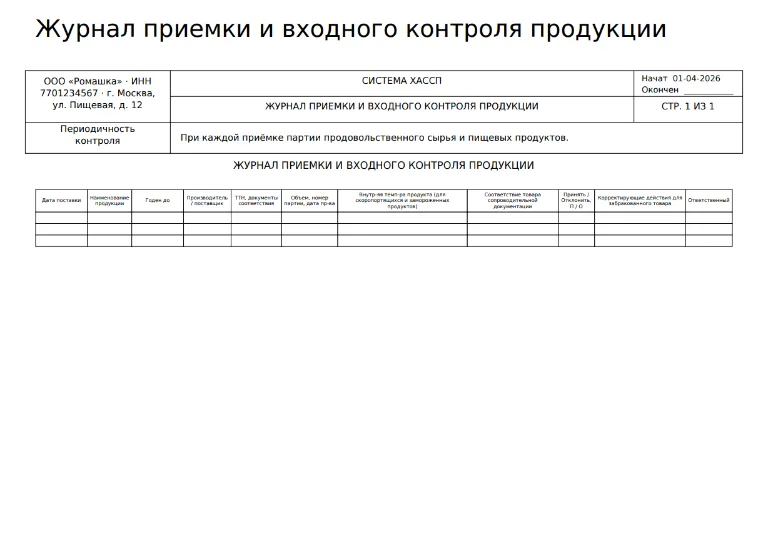
Comprehensive incoming checks cover supplier documentation, labeling and conformity with the delivery note. This protects against deliveries without a certificate.
Learn more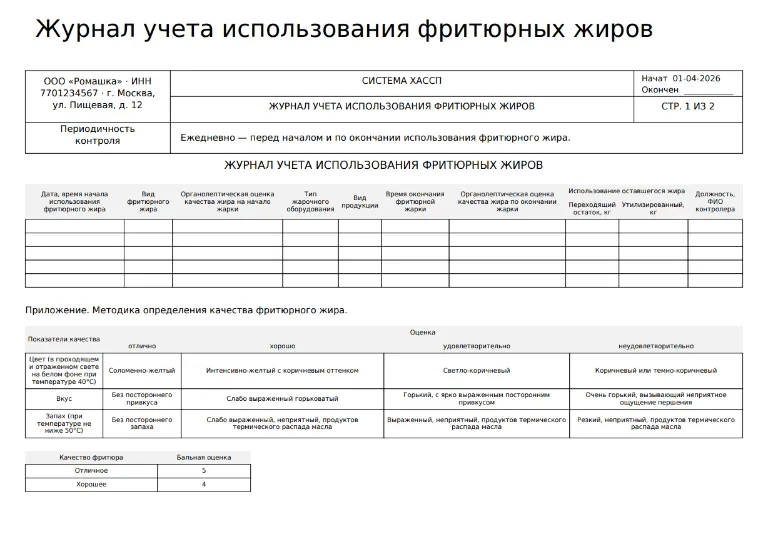
Overheated oil produces carcinogens. The log records temperature, acid value and oil changes to keep spent oil out of dishes.
Learn more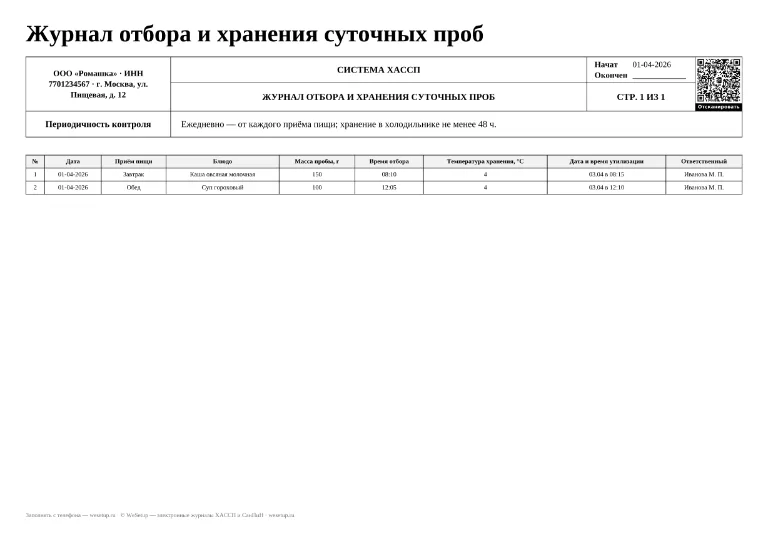
If someone becomes ill after lunch, the daily food sample is the only way to check exactly what was eaten. The log shows that a sample was taken from every dish, refrigerated for the required time and only then disposed of.
Learn more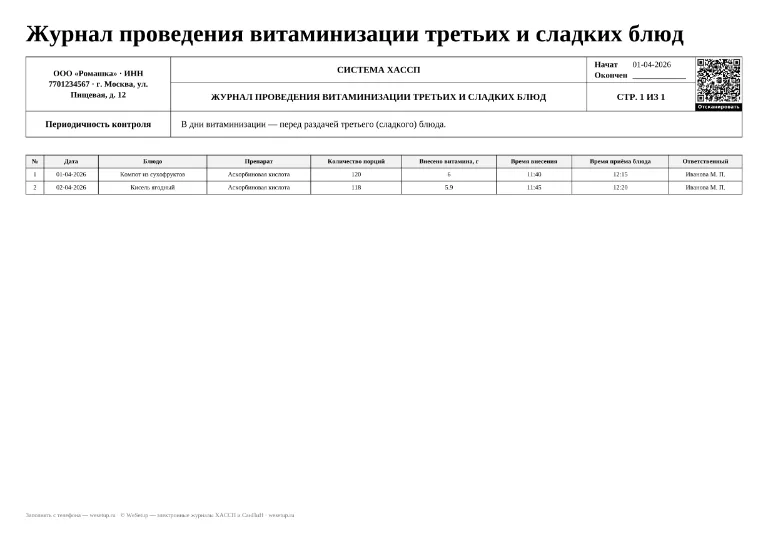
The vitamin is added to the finished dish immediately before serving. The inspector checks that this is done daily and at the correct dose per portion.
Learn more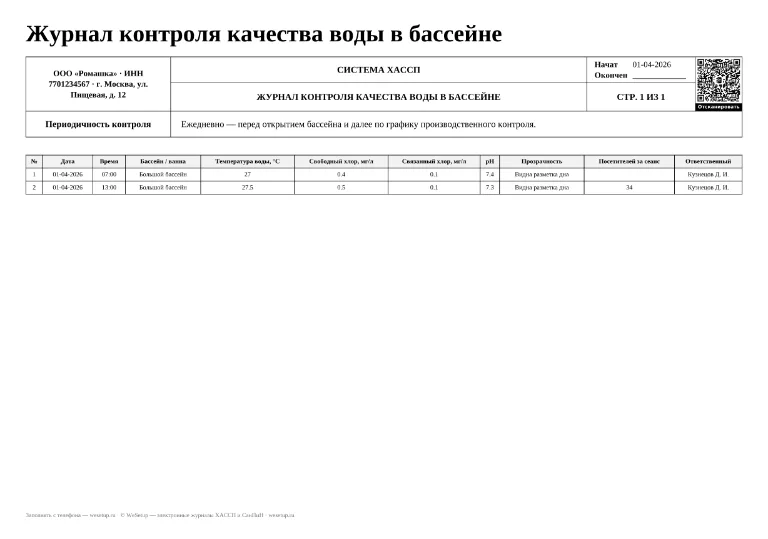
Pool water must be safe for every visitor. Measurements before opening and throughout the day show that disinfection is working and that the pool was closed promptly if readings went outside the limits.
Learn more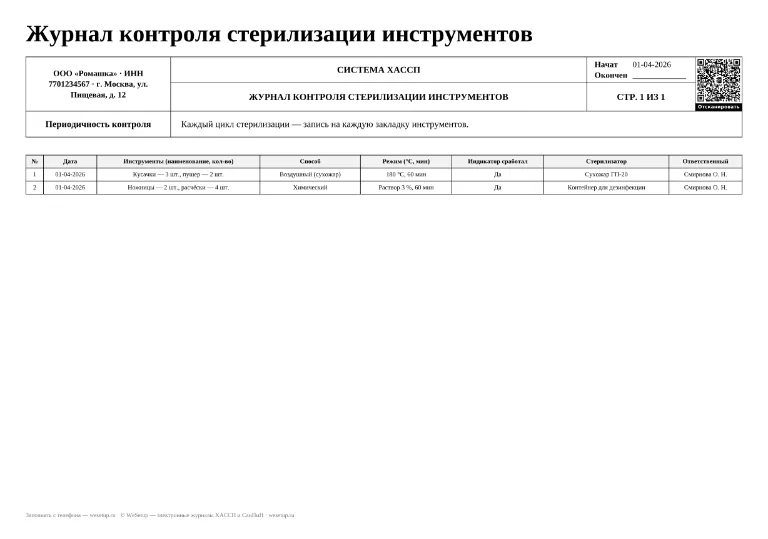
An instrument that touches a client’s skin and nails can transmit infection. Recording each sterilizer load and its indicator result confirms that the instruments actually completed the cycle rather than simply sitting in a cabinet.
Learn morePeriodic SanPiN
5 logs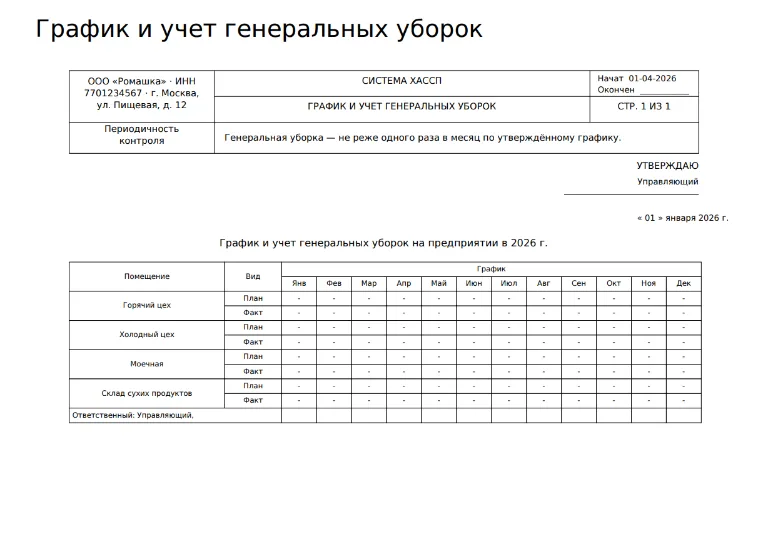
A full deep clean once per period (week / month), including removing protective grilles, washing walls and cleaning equipment. The inspector checks both the plan and the completed work.
Learn more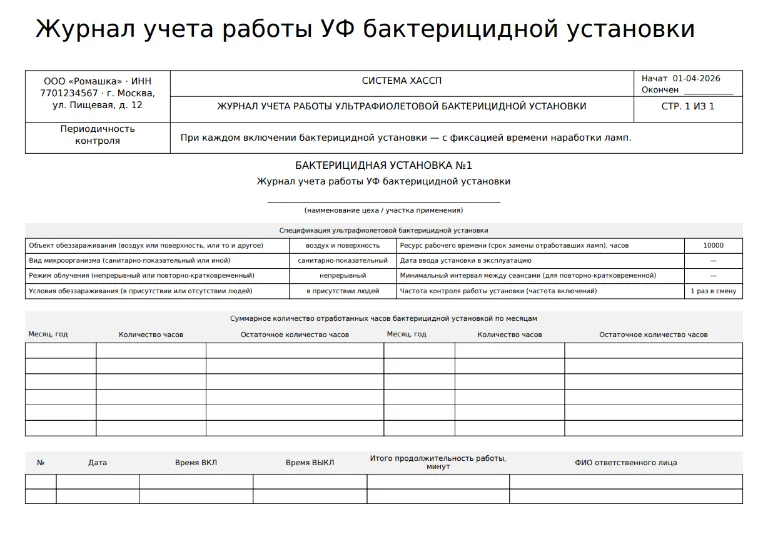
The lamp has a limited service life (8000 hours for most models). The log tracks operating hours and replacements; otherwise UV treatment becomes ineffective after the lamp reaches the end of its life.
Learn more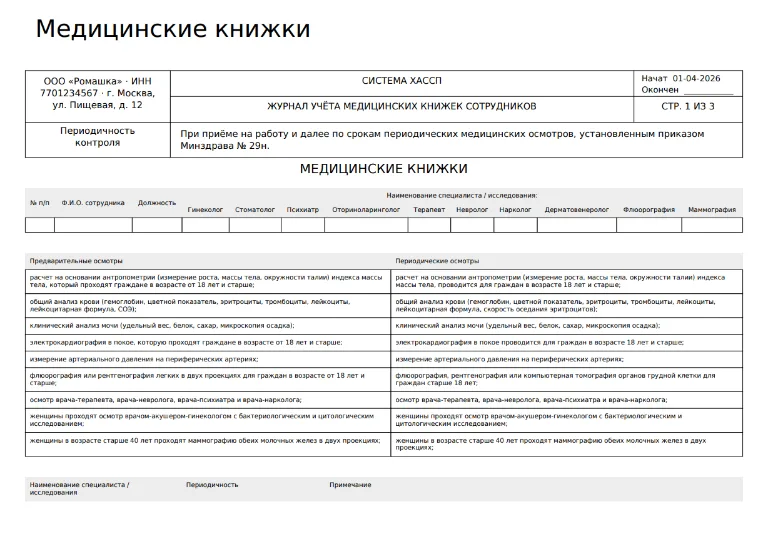
Every employee at a food business must have a valid personal medical record book. The log shows whose records are nearing expiry.
Learn more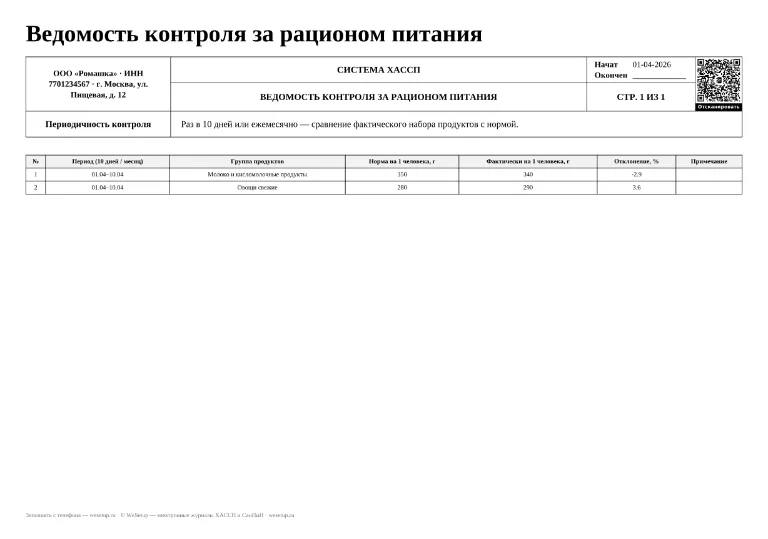
Every 10 days or monthly, the record shows whether children and patients receive the required amounts of milk, meat, vegetables and other food groups, and where the diet differs from the standard.
Learn more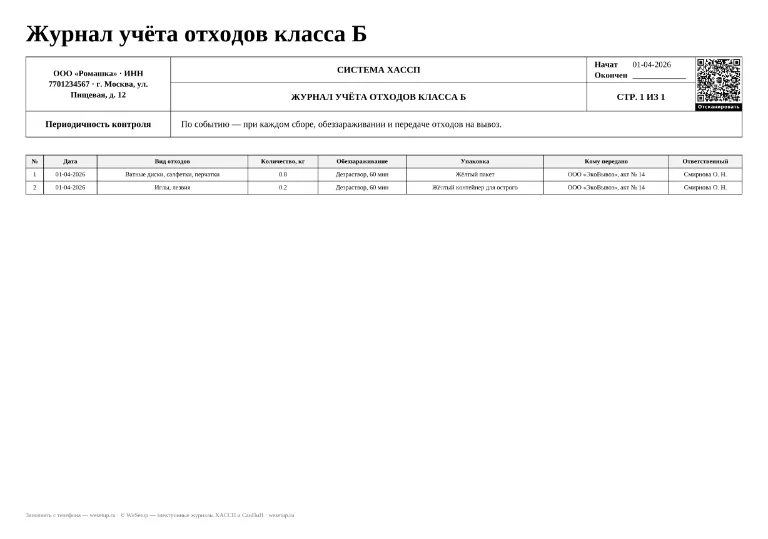
Used needles, blood-stained cotton pads and disposable materials from procedures must not go in household rubbish. The log traces the waste: how much was collected, how it was decontaminated, how it was packaged and who removed it.
Learn moreHACCP (Extended plan)
26 logs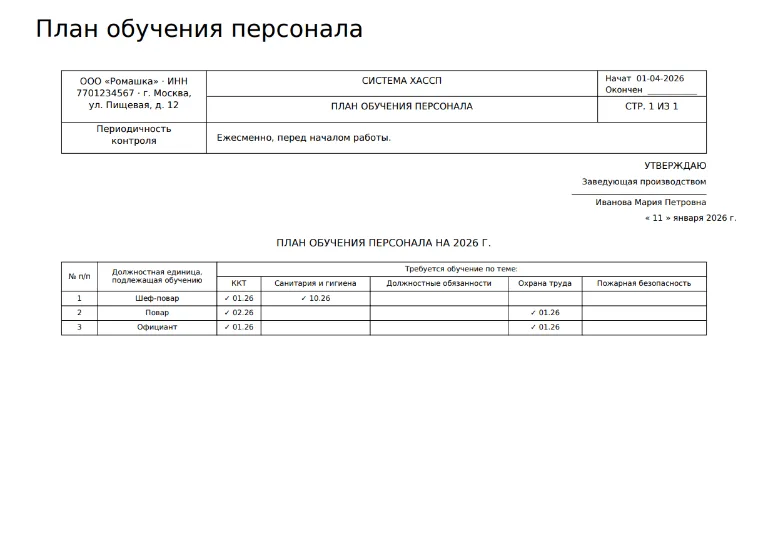
HACCP requires regular refresher briefings, not just a one-off introduction. The plan schedules who covers which topic and when.
Learn more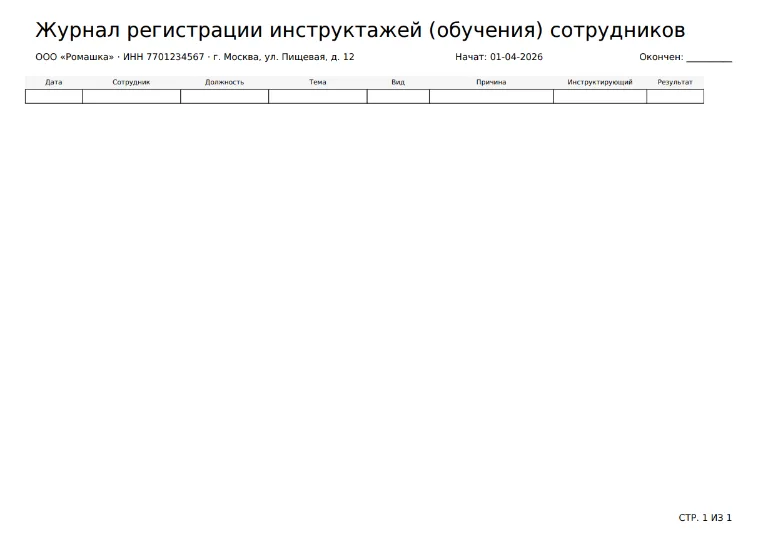
Records training completed according to the plan: who attended, when, the topic and the signature. This is the first thing requested during an incident investigation.
Learn more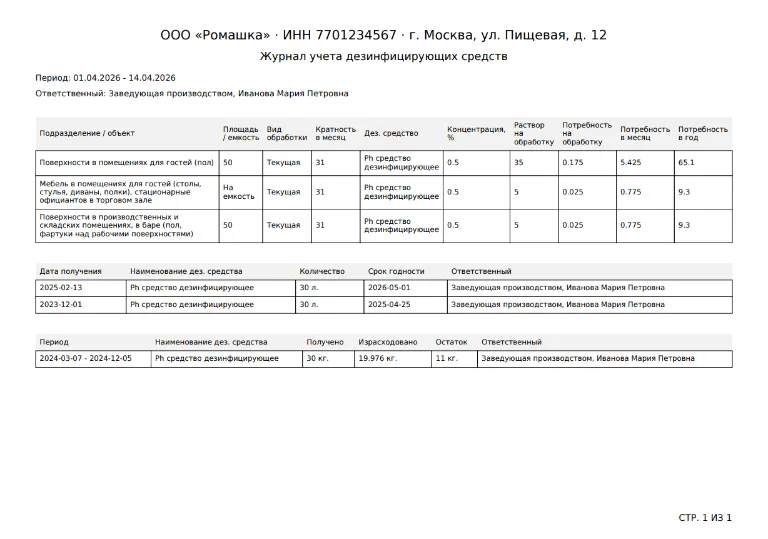
Each product must have a sanitary and epidemiological certificate, be stored separately and used according to its instructions. The log confirms purchases and consumption.
Learn more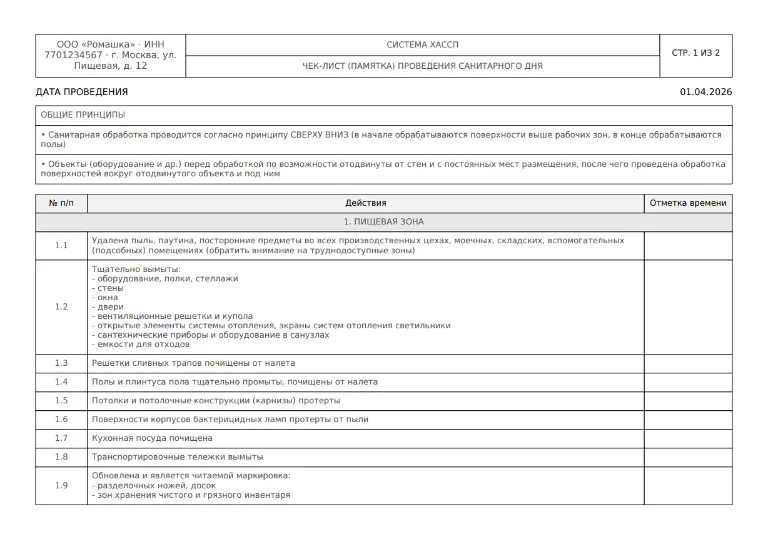
A sanitation day is held once a month: a deep clean while the establishment is closed. The checklist records completion of each item.
Learn more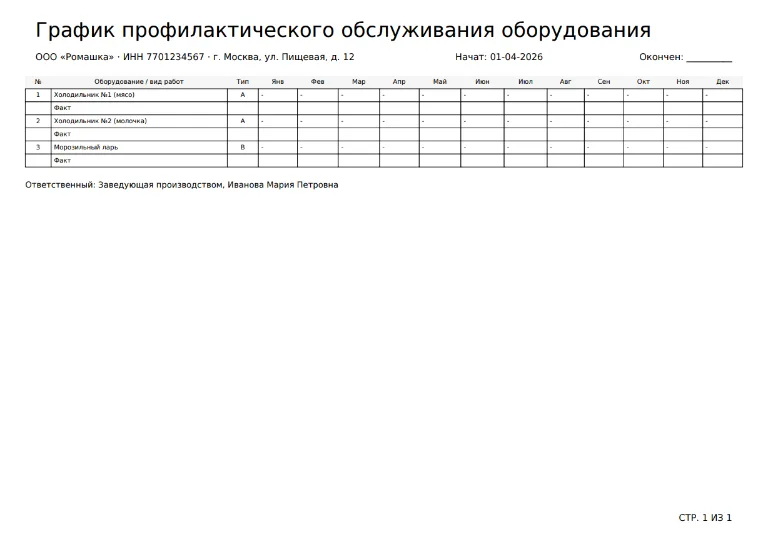
HACCP requires evidence that equipment is in working order. A schedule paired with a record of completed work is the standard approach.
Learn more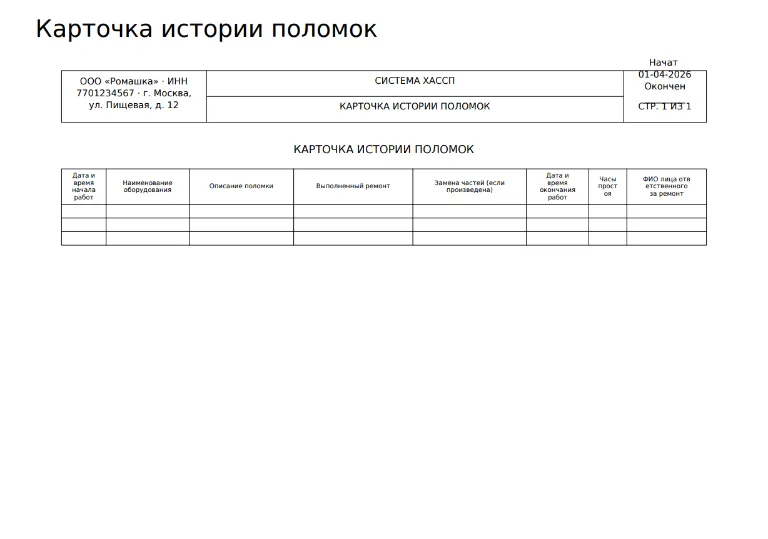
For audits: how often the refrigerator broke down, when repairs were made and what was repaired. Helps you decide on replacement in time.
Learn more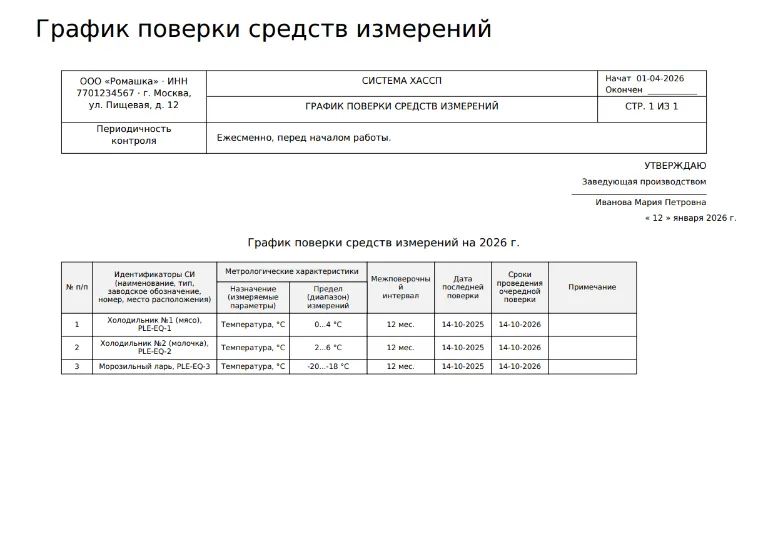
Thermometers and scales must have a valid verification certificate. Without it, their readings are not legally valid.
Learn more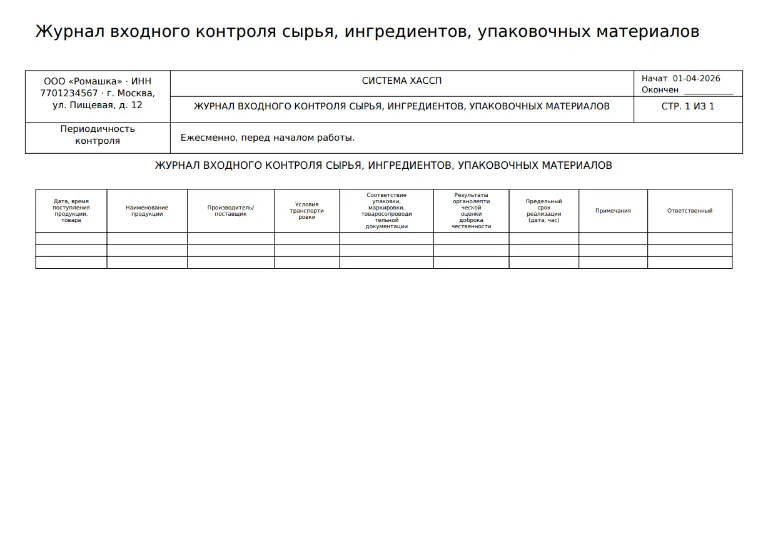
The HACCP version of goods acceptance checks not only the delivery note but also the packaging, labeling and documents for every batch.
Learn more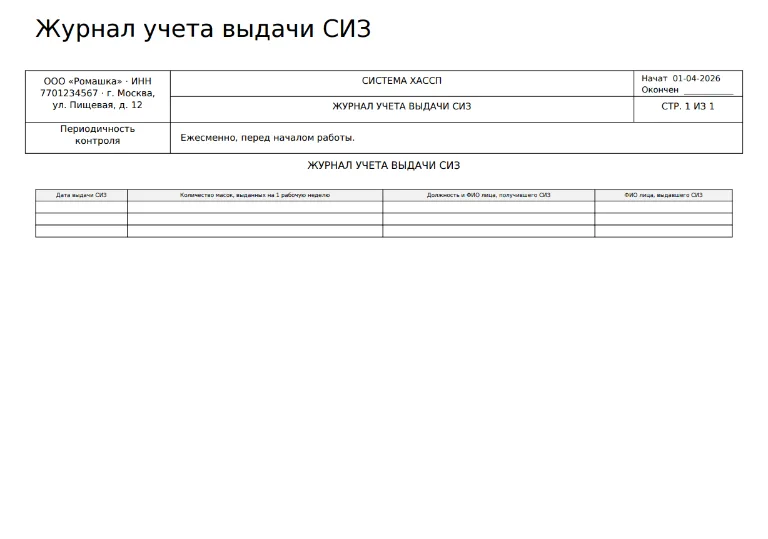
Each employee is entitled to personal protective equipment: gloves, coats, aprons and masks. The log confirms issuance and service life.
Learn more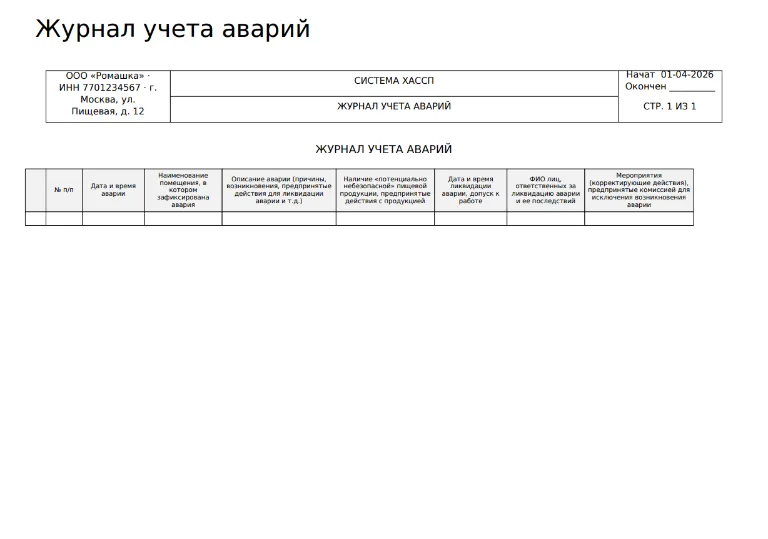
A refrigerator breakdown at night, a power outage or a leak: every incident is recorded with the measures taken and the impact on products.
Learn more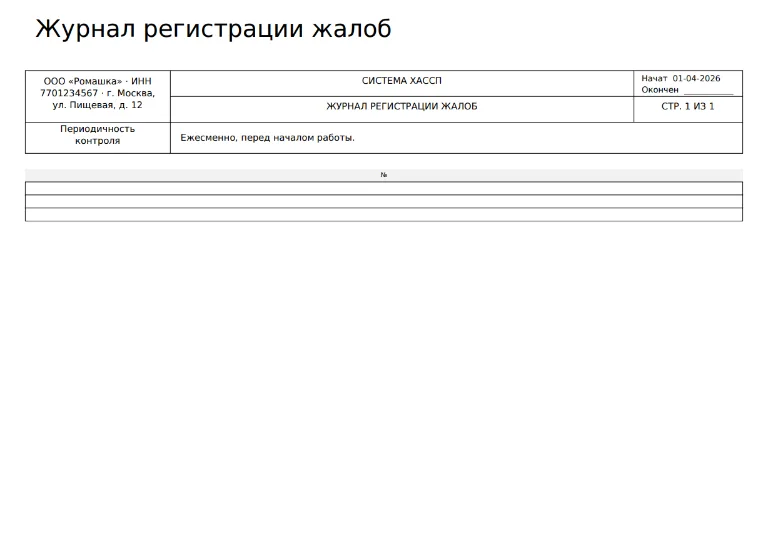
Complaints are an input signal for HACCP. Each one is recorded, investigated and closed with a corrective action.
Learn more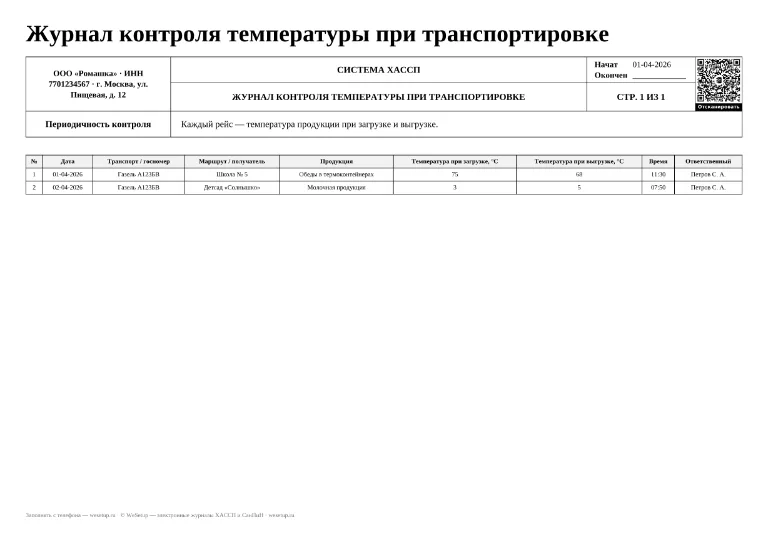
Delivery is a separate critical point: a product may leave cold and arrive warm. Two measurements on every trip show that the cold or hot chain was not broken.
Learn more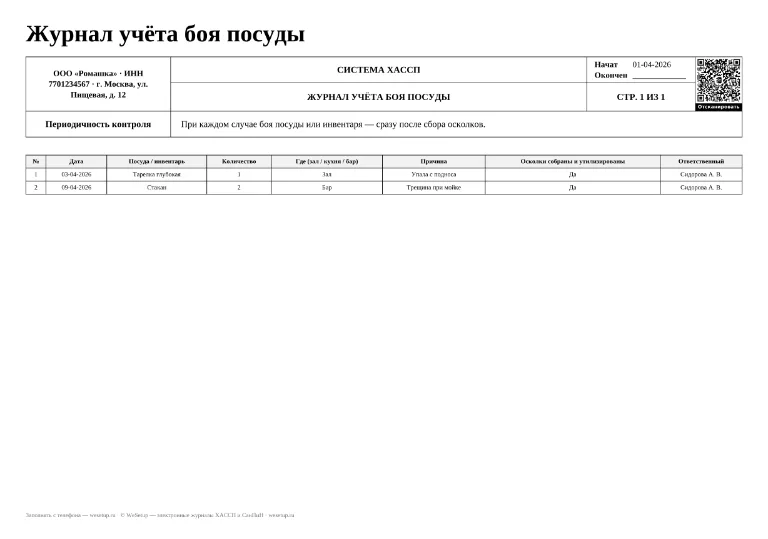
A fragment in a dish is a physical hazard to the guest. Recording every breakage confirms that fragments were collected and disposed of, and makes recurring causes immediately visible.
Learn more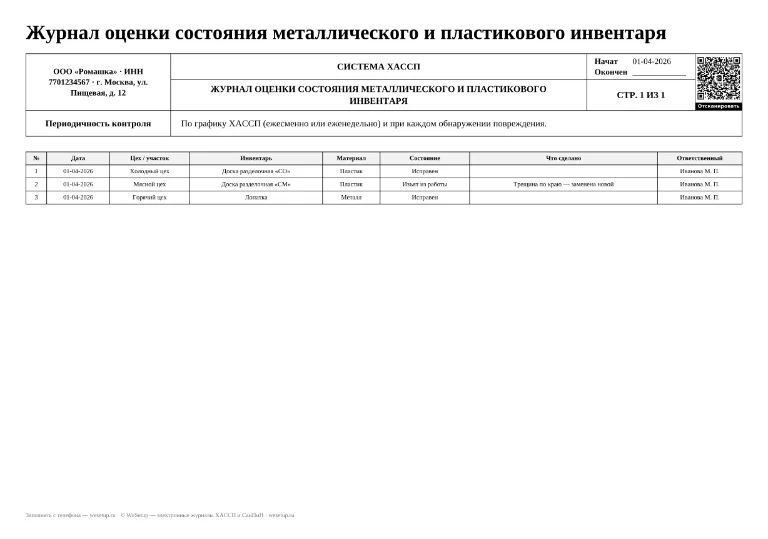
A chipped piece of plastic or metal shavings in a dish are a physical hazard. Regular inspection of knives, boards, spatulas and containers shows that damaged utensils were removed from use in time.
Learn more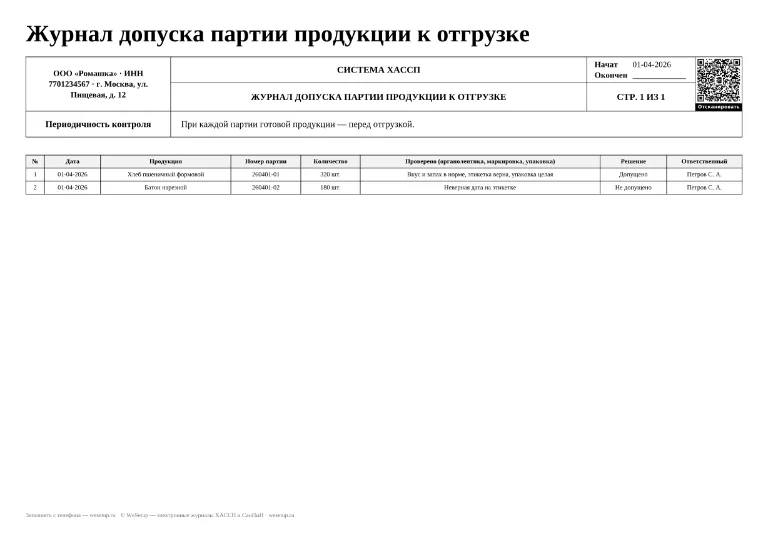
A batch is sent to the customer only after checking taste, smell, appearance, labeling and packaging. The release record shows who approved the batch and on what basis, providing the foundation for traceability and complaint investigation.
Learn more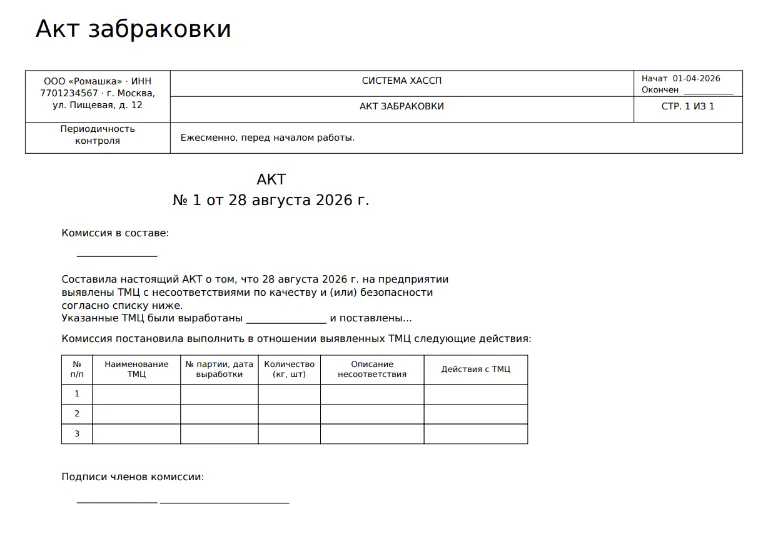
Expired, defective or spoiled products are documented in a write-off report with the reason. This supports loss analysis and claims against suppliers.
Learn more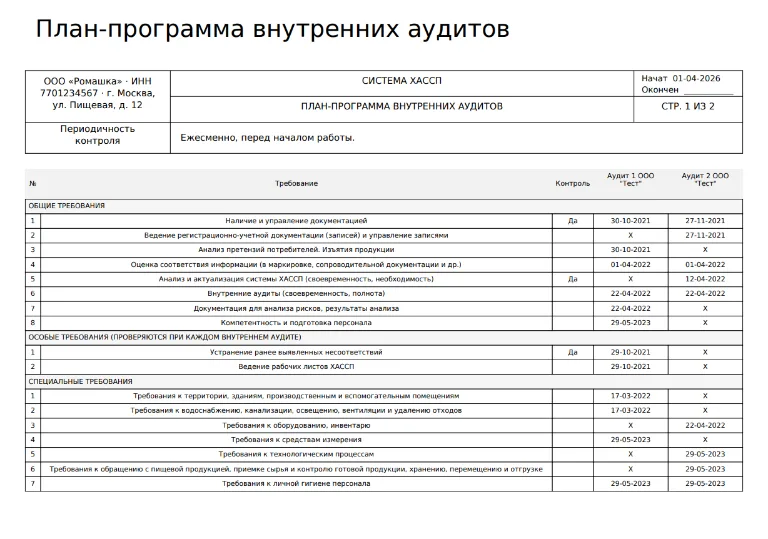
HACCP requires regular internal inspections: an auditor visits production areas with a checklist and records compliance with procedures.
Learn more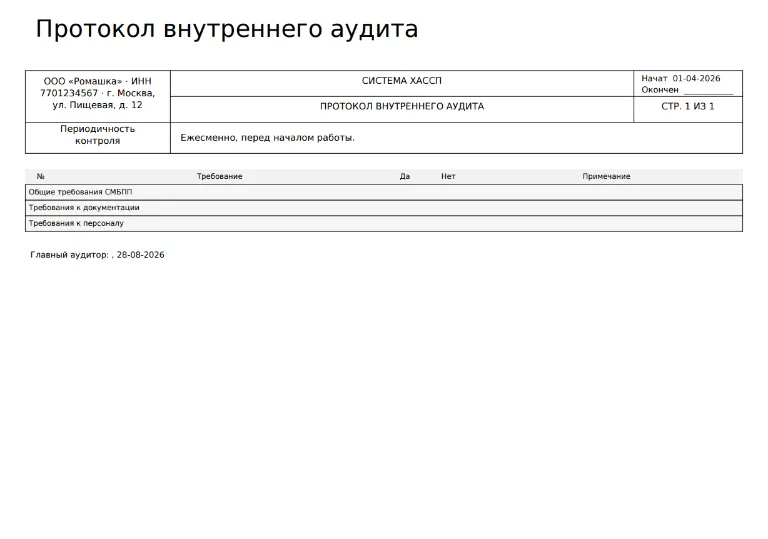
The results of the scheduled audit: what complies and what was identified as a nonconformity.
Learn more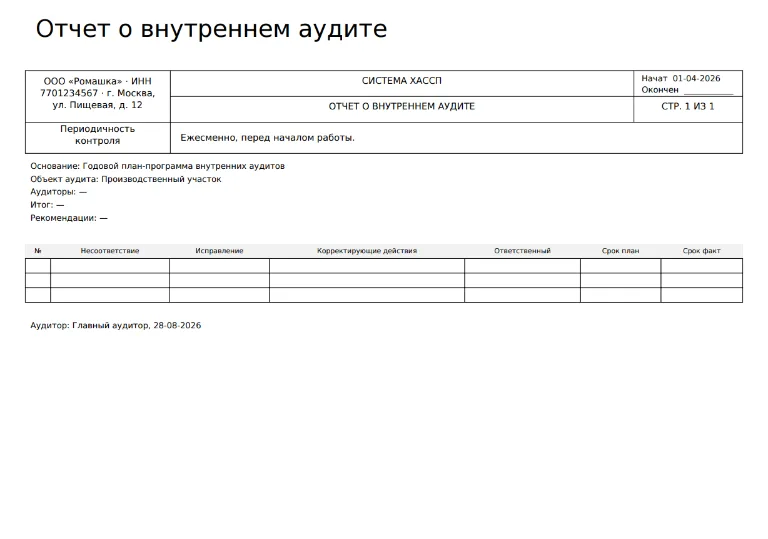
A final report for management with consolidated findings, statistics and recommendations. Presented to an inspector on request.
Learn more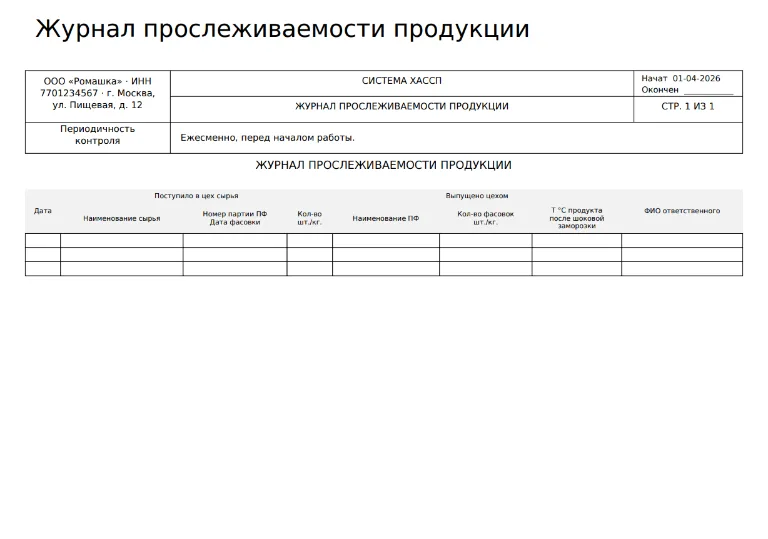
A test from delivery note to dish and back: if a guest becomes ill from food, how quickly can the full supply chain of a specific batch be traced?
Learn more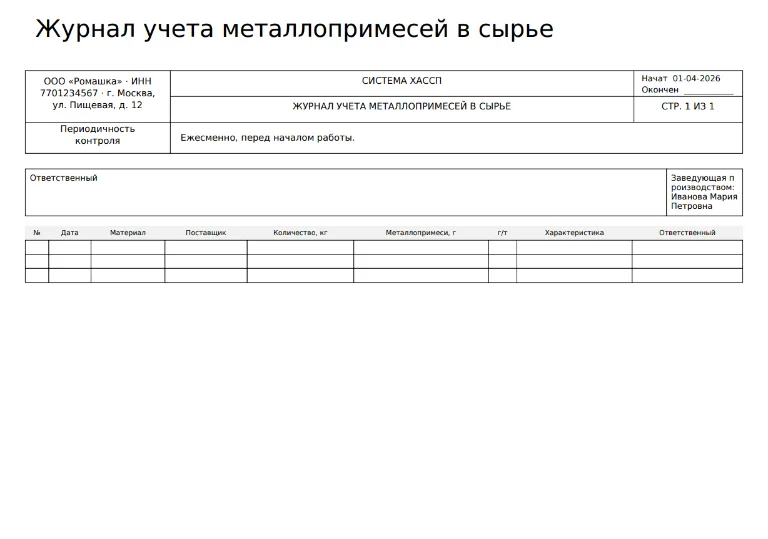
Checks using a metal detector or magnetic separator on the production line protect against packaging fragments, bolts and metal shavings.
Learn more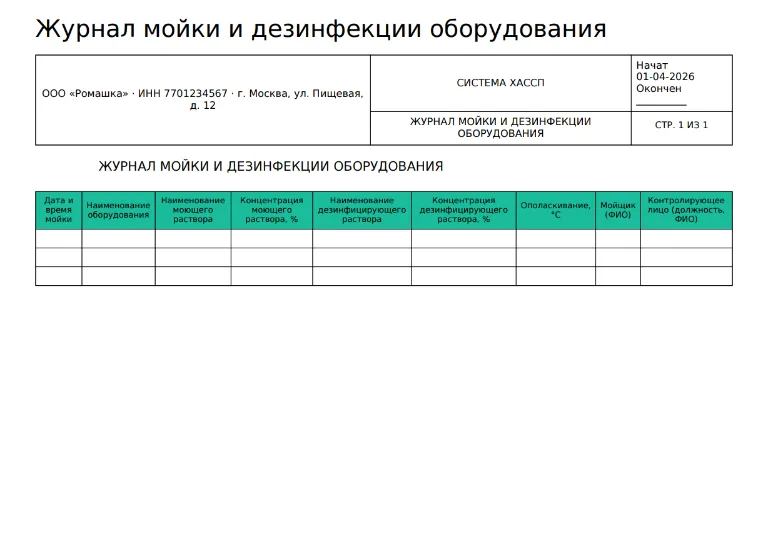
A separate procedure for production equipment such as mixers, water boilers and cookers. It differs from room cleaning: different products are used and the procedure is stricter.
Learn more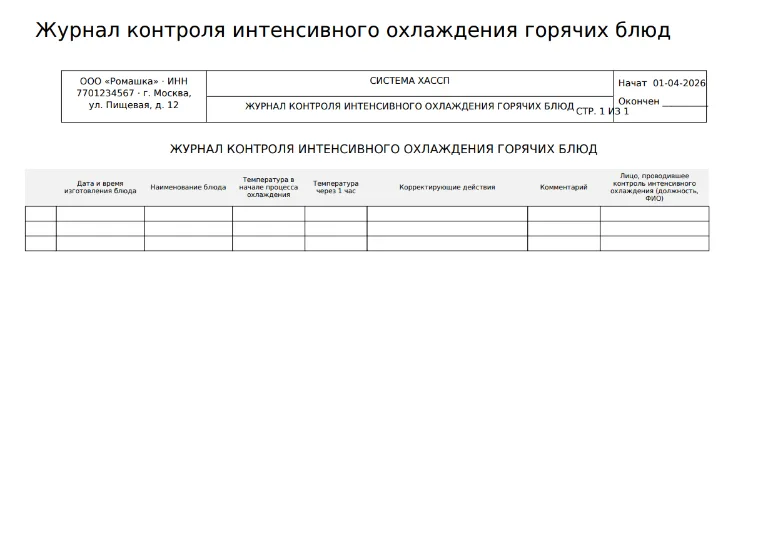
The range between 60 °C and 10 °C is a bacterial danger zone. HACCP requires passing through it in less than 2 hours and recording this.
Learn more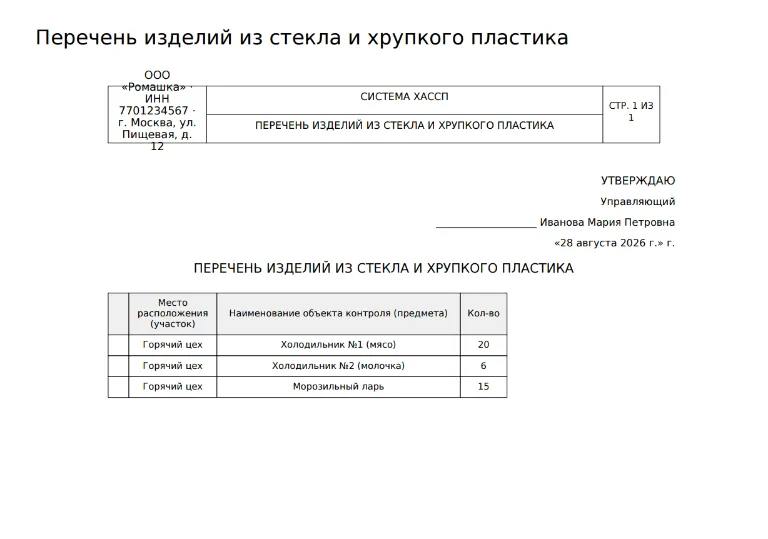
An inventory of all fragile items in the production area. If something breaks, the list is checked to confirm that all fragments have been found.
Learn more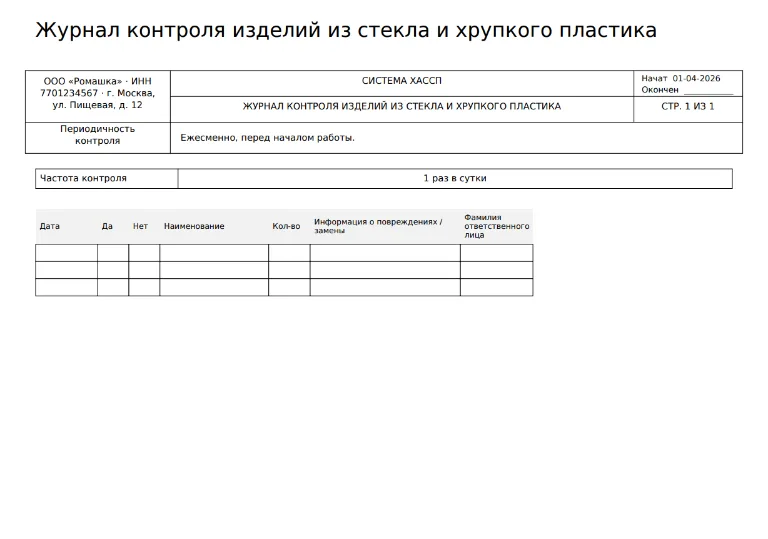
Records glass breakage, the search for fragments and the decision on what to do with the products.
Learn more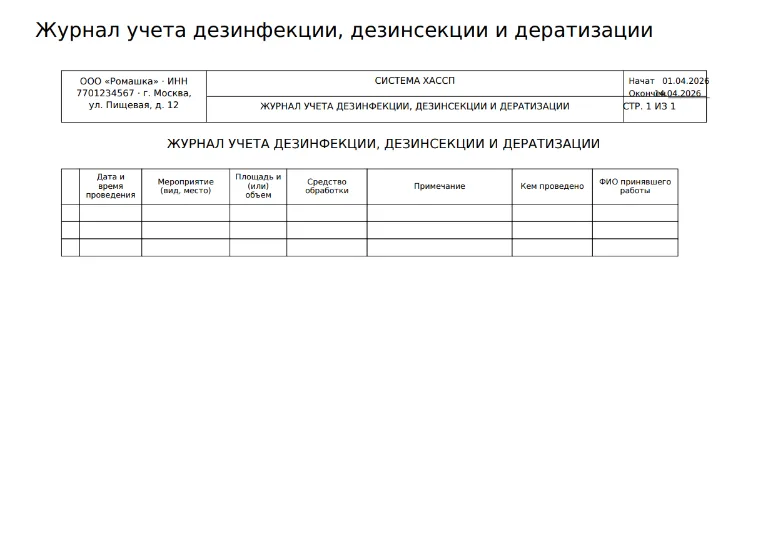
Scheduled treatments by a contractor or in-house staff: completion, product used and purpose. No serious audit is complete without this log.
Learn moreLogs for your sector
The specific list of logs required for your type of establishment.
Looking for a specific log?
Dedicated pages for popular searches, with field descriptions and the relevant SanPiN basis.
All logs are available on the free plan forever, with no card required. If you need more employees or automation, you can activate a subscription in a minute.
Try it